Learning how to generate MLA citations using AI opens new avenues for efficient and precise academic referencing. Automating citation creation not only saves valuable time but also enhances accuracy, ensuring that sources are correctly credited in scholarly work. This approach streamlines the research process, making it accessible for students, researchers, and writers seeking reliable tools to manage their citations effectively.
By leveraging AI-driven systems, users can easily input various source details and receive properly formatted MLA citations tailored to diverse source types such as books, websites, and journal articles. The typical workflow involves data entry, verification, and editing, all facilitated through intuitive AI functionalities that adapt to different citation requirements and standards, thus supporting academic integrity and consistency.
Overview of MLA Citation Generation Using AI

Automating MLA citations with AI tools has become an essential advancement in academic writing, offering a streamlined approach to creating accurate references. These tools harness the power of artificial intelligence to simplify the complex process of citation formatting, reducing errors and saving valuable time for students and researchers alike. As academic standards evolve and the volume of sources increases, the need for reliable automated systems has grown significantly.
AI-driven citation generators are designed to interpret source details—such as author names, titles, publication dates, and other relevant data—and convert them into properly formatted MLA citations. This automation not only enhances efficiency but also promotes consistency across academic work, ensuring adherence to MLA guidelines. The typical workflow involves inputting source information into an AI platform, which then processes the data and outputs a correctly formatted citation, ready for inclusion in scholarly documents.
Purpose of Automating MLA Citations with AI Tools
Automating MLA citations aims to eliminate manual formatting errors and expedite the research and writing process. Traditional citation methods require meticulous attention to detail, which can be time-consuming and prone to mistakes. AI tools serve to minimize these challenges by providing instant, reliable citation formatting based on input data, allowing users to focus more on content quality rather than formatting worries.
Benefits of Using AI for Accurate and Efficient Citations
The integration of AI in citation generation offers numerous advantages:
- Time-Saving Efficiency: AI tools can produce citations within seconds, significantly reducing the time spent on formatting tasks.
- Enhanced Accuracy: Advanced algorithms minimize human errors, ensuring citations conform strictly to MLA standards.
- Consistency: AI-generated citations maintain uniformity throughout a document, which is crucial for academic integrity.
- Ease of Use: User-friendly interfaces allow individuals with little technical expertise to generate citations effortlessly.
- Source Management: Many AI systems can store and manage multiple references, simplifying bibliography compilation for large projects.
Typical Workflow for Generating MLA Citations Through AI Systems
Understanding the step-by-step process helps users maximize the benefits of AI citation tools. The workflow generally involves the following stages:
- Input Source Details: Enter specific information about the source, such as author name, title, publication date, publisher, and URL or DOI, into the AI platform.
- Data Processing: The AI system analyzes the input data, cross-referencing internal databases and algorithms to determine the correct citation format.
- Citation Generation: The AI outputs a properly formatted MLA citation, which can be reviewed and edited if necessary.
- Integration and Usage: The generated citation is copied into the user’s document or bibliography, ensuring proper placement and formatting.
This process exemplifies efficiency and reliability, enabling users to incorporate accurate citations into their work seamlessly, whether for academic papers, research reports, or publication manuscripts.
Key Features of Effective AI Citation Tools
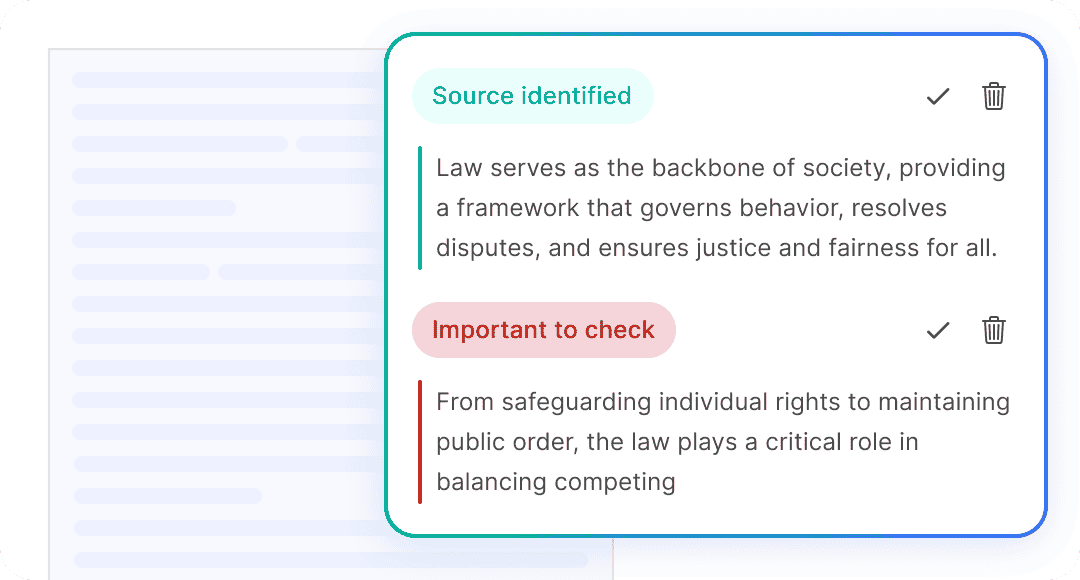
For AI-powered citation tools to be genuinely useful and reliable, they must incorporate certain key functionalities that address the diverse needs of users. These features ensure accuracy, flexibility, and adaptability across various sources and user preferences, making citation generation more efficient and user-centric.
Effective AI citation tools leverage advanced functionalities that allow users to input data seamlessly, customize outputs according to specific style requirements, validate information in real time, and accommodate a wide array of source types. Additionally, they facilitate user interaction to refine and tailor citation outputs, ensuring the generated citations meet the highest standards of academic and professional integrity.
Input Flexibility and Output Customization
One of the foundational features of a robust AI citation tool is its ability to accept various forms of input data. This flexibility ensures that users can provide information in multiple formats, such as URLs, PDF files, or manual text entries, without restrictions. This adaptability enhances user convenience and broadens the applicability of the tool across different research contexts.
Alongside input flexibility, output customization plays a crucial role in meeting specific citation style requirements. Users often need citations formatted according to guidelines such as MLA, APA, or Chicago style. Effective AI tools allow users to select preferred styles effortlessly, and some even enable tweaking details like font styles, indentation, and order of information to adhere to institutional or publication standards.
This level of control ensures citations are both accurate and visually consistent.
Real-Time Data Validation and Updates
Accurate citations depend heavily on the validity of the source data. Effective AI citation tools incorporate real-time validation mechanisms that cross-check source information against reliable databases and authoritative sources. This process helps detect and correct discrepancies, missing data, or outdated information before generating the final citation.
Furthermore, these tools are regularly updated to reflect the latest citation style guidelines and changes in source formats. This ensures that users always receive compliant and current citations, reducing the risk of academic or professional inaccuracies. For example, updates may include new digital source formats or modifications in style rules mandated by authoritative bodies such as the Modern Language Association or the American Psychological Association.
Handling Various Source Types
Sources vary widely—from books and journal articles to websites, reports, and multimedia content. An effective AI citation tool must be capable of recognizing and correctly formatting citations across these diverse source types. This involves understanding the specific citation requirements for each source category and extracting relevant information accurately.
For instance, when handling a book, the tool must identify the author, publisher, publication year, and page number. For websites, it should recognize the URL, access date, and author or organization responsible. In the case of journal articles, details such as volume, issue, and DOI are essential. Proper handling of these source-specific details ensures citations are comprehensive and compliant with style guidelines.
User Explanations and Input Refinement
Effective AI tools incorporate mechanisms that allow users to clarify or specify particular details about their sources. This interactive feature enables users to explain ambiguities or provide additional context that may not be automatically inferred by the system.
For example, a user might specify the author of a webpage when it is not clearly identified or indicate the version of a digital report. These explanations help the AI refine its data extraction and formatting processes, resulting in more precise and tailored citations. Such user engagement minimizes errors, especially with complex or incomplete source information, and enhances overall confidence in the generated citations.
Step-by-Step Procedures for Generating MLA Citations with AI
Accurate MLA citations are essential for scholarly writing, ensuring proper attribution of sources and maintaining academic integrity. Utilizing AI platforms streamlines this process by transforming detailed source data into correctly formatted citations efficiently. This guide provides a clear, systematic approach to inputting source information, verifying outputs, and organizing citation data for optimal results.
Following a structured procedure guarantees that users can produce precise MLA citations while minimizing errors. The process involves carefully entering source details, leveraging AI’s capabilities to generate formatted citations, and implementing verification steps to ensure accuracy before integrating citations into academic work.
Inputting Source Data Accurately into AI Platforms
The foundation of reliable MLA citation generation lies in providing comprehensive and accurate source data. When preparing to input information into AI tools, users should gather all relevant details, such as author names, titles, publication dates, publisher information, and source types. Consistency in formatting source data prior to input helps reduce discrepancies in the generated citations.
Most AI citation tools offer specific fields or templates for different source types—books, articles, websites, etc.—which should be filled meticulously. For example, when citing a book, include the author’s full name, book title in italics, publisher, publication year, and page numbers if applicable. Enter each detail precisely as it appears in the source to facilitate accurate citation creation.
Organizing a Process for Verifying and Editing Generated Citations
While AI tools are highly effective, they are not infallible. It is crucial to review and verify each generated citation against official MLA guidelines or the original source. Establishing a verification workflow helps catch common errors such as incorrect author order, missing punctuation, or improper formatting.
After AI generates the citation, compare it side-by-side with the MLA Handbook or reputable citation resources. Look for proper italics, quotation marks, author name formatting, and correct placement of publication details. If discrepancies are found, use editing tools or manual adjustments to correct the citation before final inclusion in your work.
Using html table Tags to Structure Source Data and Citation Results
Organized presentation of source data alongside generated citations enhances clarity and facilitates quality control. Using a structured table allows users to systematically compare input information with output, ensuring completeness and correctness. Below is an example of how to organize this data:
html table
| Source Type | Source Data | Generated MLA Citation | Verification Notes |
|---|---|---|---|
| Book |
|
Doe, Jane. Exploring Modern Art. Art Press, 2020. | Match with source; no corrections needed. |
| Website |
|
Smith, John. “The Future of Technology.” TechInsights.com, 15 Mar. 2022. | Check formatting of date; verify website name italics. |
Methods to Enhance Citation Accuracy and Consistency
Ensuring that AI-generated MLA citations adhere strictly to official guidelines and maintain consistency across various sources is crucial for academic integrity and professionalism. Implementing effective techniques to verify and correct citations enhances the reliability of AI tools and supports users in producing accurate bibliographies. This section explores practical strategies for cross-checking citations with official MLA standards, instructing AI to rectify common errors, and customizing AI performance to specific citation needs.Accurate citations are foundational to scholarly work, and even sophisticated AI systems may occasionally generate errors or inconsistencies.
By applying systematic verification methods, users can significantly improve the precision of their citations. Additionally, guiding AI to recognize and correct frequent mistakes ensures that citation outputs align with the latest guidelines and particular requirements of different academic institutions or publication outlets.
Cross-Checking AI-Generated Citations with Official MLA Guidelines
To maximize citation accuracy, it is essential to compare AI-generated references with the authoritative sources of MLA formatting rules. The Modern Language Association publishes the MLA Handbook, which serves as the definitive guide for citation standards. Users should:
- Consult the latest edition of the MLA Handbook or official online resources to verify formatting details such as author names, titles, publication dates, and container information.
- Use dedicated MLA style checkers or citation management tools that incorporate the official guidelines for automated cross-verification.
- Implement manual review processes to scrutinize each citation, ensuring that elements such as italics, punctuation, and order conform precisely to MLA standards.
Regular cross-checking not only detects discrepancies but also helps refine AI prompts for future citation generation, leading to increasingly accurate results over time.
Techniques for Explaining AI to Correct Common Citation Errors
Training AI systems to recognize and amend typical mistakes involves developing clear instructions and feedback mechanisms. Techniques include:
- Providing explicit examples of common errors, such as incorrect author name order, missing publication details, or improper punctuation, and demonstrating correct formatting.
- Using iterative prompts that ask the AI to review, evaluate, and correct citations based on specific MLA criteria, fostering a learning loop.
- Incorporating conditional instructions within prompts that highlight frequent issues—like incorrect use of italics for titles or omission of URLs—and instruct the AI on proper corrections.
- Utilizing feedback loops where users input the AI’s output, highlight errors, and guide the AI toward improved accuracy in subsequent generations.
By systematically instructing AI on common pitfalls and correction strategies, users can significantly enhance the precision and reliability of generated citations.
Comparison Chart for Citation Variations Across Source Types
Different source types—such as books, journal articles, websites, and multimedia—have distinct citation formats within MLA style. Organized comparison charts facilitate quick reference and ensure consistency:
| Source Type | Key Elements | Sample MLA Citation |
|---|---|---|
| Book | Author, Title, Publisher, Year |
|
| Journal Article | Author, “Title of Article,” Journal Name, vol. number, no. number, Year, pages. |
|
| Website | Author, “Title of Webpage,” Website Name, Publisher (if different), Date of publication, URL. |
|
| Multimedia | Title, Contributor, Year, Format, Additional details. |
|
This organized comparison helps both users and AI systems distinguish formatting nuances and adapt citations accordingly, maintaining consistency across diverse source types.
Training and Customizing AI for Specific Citation Needs
Tailoring AI systems to meet particular citation requirements enhances flexibility and accuracy, especially for specialized fields or institutional standards. Approaches include:
- Creating annotated datasets comprising correctly formatted citations in various styles and source types, which serve as training material for AI models.
- Defining custom prompts that specify unique formatting nuances, such as multiple authors, corporate authors, or non-standard publication types.
- Implementing rule-based algorithms integrated into AI workflows that enforce specific citation patterns relevant to particular disciplines or publishers.
- Using machine learning techniques to adapt AI responses based on user feedback, gradually improving the system’s ability to generate precise and consistent citations aligned with user-specific needs.
By investing in targeted training and customization, users can leverage AI tools that not only produce accurate citations but also adapt seamlessly to evolving citation standards and unique project requirements.
Examples of Effective Explainings for MLA Citation Generation
Creating clear and detailed instructions for AI to generate accurate MLA citations is essential for producing reliable results. Effective explanations serve as precise prompts that guide AI in understanding the source type, necessary citation elements, and formatting nuances. When crafting these explanations, it’s important to specify the nature of the source, include key metadata, and Artikel any particular formatting requirements to ensure consistency and correctness.
Below are practical strategies and examples for instructing AI to generate MLA citations from various raw data inputs, including specific formatting considerations and batch processing techniques.
Bullet Point List of Explaining Structures to AI for Generating Citations from Raw Data
Providing structured explanations helps AI interpret raw data effectively, ensuring accurate and comprehensive citations. Key elements to include are:
- Identification of source type (book, article, website, multimedia)
- Clear listing of metadata fields such as author(s), title, publisher, publication date, volume, issue, page numbers, URL, DOI, or access date
- Explicit instructions on MLA formatting conventions, including italics, quotation marks, punctuation, and order
- Guidance on handling multiple authors or editors with proper conjunctions and delimiters
- Instructions to include or omit specific elements like access dates, depending on source type or user preference
- Directions for batch processing multiple sources, emphasizing separation and identification of each
Examples of Explaining Requests for Different Source Types
Providing specific examples of how to request citations for various sources improves clarity and consistency. Here are illustrative explainings for common source types:
- Book: “Generate an MLA citation for a book with the following details: author John Doe, titled The Art of Coding, published by Tech Publishers in 2018, located in New York.”
- Article: “Create an MLA citation for a journal article authored by Jane Smith, titled ‘Digital Transformations,’ published in the Journal of Modern Tech, volume 12, issue 3, pages 45-67, in 2020, DOI 10.1234/jmt.2020.5678.”
- Website: “Provide an MLA citation for a webpage authored by Alex Johnson titled ‘AI in Education,’ published on the website eduinnovate.org on March 10, 2022, retrieved on April 15, 2023.”
- Multimedia: “Create an MLA citation for a YouTube video titled ‘Learning MLA Formatting,’ uploaded by CitationTips on June 5, 2021, with a URL https://youtube.com/abc123.”
Sample Explaining Requests with Specific Formatting Nuances
To ensure citations adhere to particular formatting nuances, detailed instructions are necessary. Here are sample explainings incorporating such nuances:
Request: “Generate an MLA citation for a scholarly article including the author, article title in quotes, journal name in italics, volume, issue, pages, publication year, and DOI, ensuring correct punctuation and italics as per MLA guidelines.”
This instructs the AI to pay close attention to italics and punctuation, essential for citation accuracy.
Request: “Create an MLA citation for an online newspaper article with the author’s name, article title in quotes, newspaper name in italics, publication date, URL, and access date, formatted precisely with punctuation and italics.”
Emphasizes the importance of formatting online sources with access dates and proper punctuation.
Batch Processing Multiple Sources
Efficiently generating citations for numerous sources requires clear batch instructions. Providing a structured list of source data, separated by labels or delimiters, allows AI to process each source systematically. For example:
- Source 1: Author: Emily White; Title: Environmental Challenges; Publisher: Green Earth Press; Year: 2019; Pages: 112-130
- Source 2: Author: Michael Lee; Website: Tech Today; URL: https://techtoday.com/article123; Accessed: March 20, 2023
- Source 3: Artist: Carla Gomez; Artwork: ‘Sunset Over Mountains’; Medium: Oil on Canvas; Year: 2017; Location: Museum of Modern Art
A clear instruction might be: “Generate MLA citations for each source listed, ensuring each citation is correctly formatted and separated by line breaks or numbering for clarity.”
Troubleshooting Common Issues in AI-Generated MLA Citations
While AI-powered tools have significantly streamlined the process of generating MLA citations, users may still encounter common issues that affect the accuracy and reliability of the output. Addressing these problems promptly ensures that citations adhere to MLA standards and that academic integrity is maintained. Understanding typical errors and implementing effective strategies for correction can improve the overall quality of automated citations, saving time and reducing ambiguity.
In this section, we explore frequent issues such as missing information or formatting errors, provide detailed strategies for refining explainings to enhance output quality, and Artikel practical procedures for manual review and correction. This guidance equips users with the necessary knowledge to troubleshoot effectively and optimize AI-generated MLA citations.
Common Errors in AI-Generated MLA Citations
AI citation tools, despite their sophistication, often produce citations with errors that stem from incomplete data or misinterpretations of formatting rules. Typically, these errors can be categorized into missing information, incorrect formatting, or inconsistent application of MLA guidelines.
| Problem Description | Solution Strategy |
|---|---|
| Missing essential information: Such as author names, publication dates, or page numbers, which are crucial for a complete MLA citation. | Verify the source data used for input; cross-reference with the original source to ensure all necessary details are collected. Use manual prompts to AI, requesting specific data points if missing. |
| Incorrect formatting of author names: For example, reversing first and last names or improper use of initials. | Specify the format explicitly in the AI instructions—e.g., “Format author names as Last Name, First Name”—and review generated citations for conformity before final use. |
| Inconsistent date formatting: Such as mixing MLA style with other styles or incorrect placement within the citation. | Set clear guidelines in the prompting process, emphasizing that dates should follow MLA conventions—day, month, year—and be placed after the author or title as appropriate. |
| Incorrect title capitalization or italics: Titles may not be capitalized correctly or may lack proper italics or quotation marks. | Use detailed instructions along with examples for title formatting. Review and manually adjust titles post-generation to ensure adherence to MLA standards. |
| Missing or incorrect container information: When citing sources within larger works, such as journal articles or chapters. | Include prompts for AI to recognize container titles and ensure they are formatted correctly in italics, with proper punctuation and placement. |
Strategies for Refining Explainings to Improve Output Quality
Refining the prompts and instructions provided to AI can significantly enhance citation accuracy. Clear, specific, and detailed explanations guide the AI to better understand the formatting rules and data expectations, minimizing errors. Regularly updating the explainings with examples of correct MLA citations helps the AI learn contextual nuances and reduces ambiguity.
Utilizing iterative prompting—reviewing initial outputs, identifying mistakes, and providing corrective feedback—fosters continuous improvement. Incorporating explicit instructions for common pitfalls and emphasizing the importance of verifying each element cultivates higher-quality output.
Manual Review and Correction Procedures for AI Citations
Automated citation generation should be complemented with a systematic manual review process. This ensures that any discrepancies or errors are identified and rectified before final submission. The following procedures facilitate effective manual review and correction:
- Cross-verify source details: Compare each element of the AI-generated citation with the original source to confirm accuracy and completeness.
- Check formatting adherence: Ensure author names, titles, dates, and other components follow MLA guidelines. Pay special attention to punctuation, italics, and capitalization.
- Utilize reference guides: Keep MLA style manuals or trusted online resources handy during the review process for quick reference.
- Make necessary adjustments: Manually correct any identified issues, such as adding missing data, fixing formatting errors, or repositioning information within the citation.
- Document corrections: Keep track of frequent errors to refine prompts and explainings, reducing recurrence in future generations.
Common Issues and Solutions in AI-Generated MLA Citations

Effective troubleshooting enhances the reliability of AI tools in producing MLA citations. Recognizing typical errors and applying targeted solutions helps maintain academic standards and saves time.
Typical Errors in AI-Generated MLA Citations
AI tools may produce citations with missing data, formatting inconsistencies, or misapplied MLA rules. Addressing these issues requires understanding their nature and implementing corrective strategies.
| Problem Description | Solution Strategy |
|---|---|
| Missing essential information: Such as author names, publication dates, or page numbers. | Verify source input; request specific details from the AI; cross-check with source documents. |
| Incorrect formatting of author names: Reversed order or improper initials. | Specify formatting instructions; review and manually adjust as needed. |
| Date formatting issues: Improper placement or style. | Use explicit prompts emphasizing MLA date conventions; verify placement after author or title. |
| Title formatting errors: Capitalization and italics mistakes. | Provide clear title formatting instructions; manually correct post-generation if necessary. |
| Container information omissions: Missing journal or book titles within citations. | Include prompts to identify and format container titles correctly in italics. |
Strategies for Refining Explainings to Improve Output Quality
Refining AI prompts with detailed instructions, examples, and feedback ensures more accurate output. Regular updates and iterative prompting help reduce errors and improve citation fidelity.
Manual Review and Correction Procedures for AI Citations
Implement a thorough review process involving cross-verification, formatting checks, and manual adjustments to ensure all citations meet MLA standards. Document common errors to inform ongoing prompt optimization.
Integrating AI Citation Generation into Academic Workflow

Incorporating AI tools for MLA citation generation into academic research and writing processes can significantly streamline the scholarly workflow. Proper integration ensures that citations are accurate, consistent, and efficiently produced, freeing researchers and students to focus more on the content of their work while maintaining integrity and adherence to academic standards. Effective integration involves selecting suitable AI tools, establishing clear procedures, and fostering best practices to optimize the benefits while minimizing potential pitfalls.
Employing AI citation generators as part of the research and writing process requires strategic planning to ensure they complement existing workflows. It involves understanding the appropriate stages for utilizing AI, implementing validation steps to prevent errors, and maintaining compliance with academic integrity policies. The following s provide guidance on how to seamlessly incorporate these tools into scholarly activities and uphold the quality and reliability of citations.
Methods for Incorporating AI Tools within Research and Writing Processes
Successful integration begins with identifying the stages of research where AI citation tools can offer maximum benefit. These include initial literature review, source documentation, and final manuscript editing. Researchers should use AI tools during the note-taking phase to record source details automatically, which can help in building a comprehensive bibliography later. When writing drafts, AI-generated citations can be inserted with confidence, provided they are validated later.
Establishing a workflow that incorporates AI tools involves setting aside specific time points for citation generation and verification. For example, after selecting sources, researchers can input source details into the AI tool to generate preliminary citations. These are then cross-checked against original source information for accuracy. Integrating AI into a reference management system or writing platform, such as integrating with word processors, can further streamline the process.
Training users on how to effectively utilize AI tools is also crucial. Providing tutorials or guidelines on inputting source data correctly and understanding the scope of AI-generated citations helps prevent errors and reduces reliance on automated outputs without oversight.
Best Practices for Maintaining Citation Integrity and Avoiding Plagiarism
While AI tools greatly assist in citation management, maintaining the integrity of scholarly work requires vigilance. It is essential to verify all AI-generated citations against original source information to avoid inaccuracies that could lead to unintentional plagiarism or incorrect attribution. Proper attribution involves ensuring that each citation correctly reflects the source’s authorship, publication date, and other bibliographic details.
To prevent plagiarism, researchers should treat AI-generated citations as preliminary drafts rather than final versions. Cross-referencing with authoritative sources, such as library databases or publisher websites, reinforces accuracy. Additionally, maintaining detailed notes of source verification steps and citing practices creates an audit trail that can be referenced if questions about citation integrity arise.
Encouraging a culture of meticulous review and critical assessment of AI outputs is vital. Users should develop habits of manually reviewing generated citations, especially in complex cases involving multiple authors, editions, or special source types. This approach ensures the scholarly work remains ethical, accurate, and compliant with MLA standards.
Checklist for Citation Validation Steps
Implementing a structured validation process is fundamental to ensuring citation accuracy. The following flowchart in table format provides a systematic checklist for verifying AI-generated MLA citations:
| Validation Step | Description |
|---|---|
| 1. Source Verification | Cross-check source details (author, title, publication info) against original source material or trusted databases. |
| 2. Citation Format Review | Ensure the citation conforms to the latest MLA standards, including punctuation, italics, and order of elements. |
| 3. Consistency Check | Verify uniformity of citation style across all references in the document. |
| 4. Completeness Assessment | Confirm that all necessary elements are present, such as author name, title, publisher, date, and page numbers if applicable. |
| 5. Plagiarism Scan | Use plagiarism detection tools to ensure citations and paraphrased content are properly attributed and original. |
| 6. Final Review | Conduct a comprehensive read-through to check for formatting errors, typographical mistakes, and proper placement within the text. |
Adopting this checklist as part of the workflow helps maintain high standards of citation accuracy and scholarly integrity.
Importance of Keeping AI Tools Updated with Current MLA Standards
MLA citation guidelines are periodically revised to accommodate changes in scholarly publishing and source types. Consequently, it is critical to keep AI citation tools current with the latest MLA standards. Outdated tools may generate incorrect or inconsistent citations, risking non-compliance with academic requirements and damaging the credibility of research work.
Regular updates to AI tools ensure they incorporate recent changes in formatting rules, source classifications, and digital source handling. Many AI tools offer automatic updates or notifications when new standards are released, and users should enable these features. Additionally, staying informed about MLA style updates—through official MLA resources or academic writing centers—helps users verify that their AI tools are functioning correctly.
Integrating a routine review process for the AI tools’ performance creates a safeguard against citation errors. This involves periodically testing the tool with known sources, comparing generated citations with official MLA guidelines, and adjusting workflows accordingly. Such diligence guarantees that AI-generated citations remain accurate, standardized, and aligned with current academic expectations.
Last Recap
In conclusion, mastering how to generate MLA citations using AI empowers individuals to produce accurate and consistent references with minimal effort. Incorporating these tools into the research workflow not only enhances productivity but also ensures adherence to official citation standards. As AI technology continues to evolve, staying updated and refining citation strategies will further improve the quality and reliability of academic work.