Learning how to organize citations in APA with AI can significantly enhance the efficiency and accuracy of academic writing. Leveraging AI tools allows researchers to manage sources systematically, ensuring compliance with APA standards while saving valuable time. This approach streamlines the process of collecting, formatting, and updating citations, making scholarly work more organized and reliable.
Integrating AI into your research workflow provides a step-by-step method to handle citations seamlessly. From collecting source data to generating properly formatted reference lists, AI tools facilitate automation and accuracy. Understanding core principles of APA style and utilizing AI capabilities can elevate the quality of your citations and overall research presentation.
Overview of organizing citations in APA with AI tools

Proper organization of citations in APA format is a fundamental aspect of maintaining academic integrity and ensuring clarity in scholarly writing. When references are systematically managed, readers can easily verify sources, and researchers can avoid unintentional plagiarism. With the advent of AI-powered tools, managing citations has become more efficient, accurate, and streamlined, especially for extensive research projects that involve numerous references.
AI tools designed for citation management assist users in automatically generating, formatting, and updating references according to APA standards. These tools reduce manual effort, minimize errors, and save valuable time, enabling researchers to focus more on their core analysis and writing processes. Integrating AI-based citation tools into research workflows involves a few structured steps to optimize their benefits effectively.
Integrating AI-based citation tools into research workflows
To leverage AI tools effectively, researchers should adopt a systematic approach that seamlessly incorporates these resources into their existing research practices. The following step-by-step guide illustrates how to do this efficiently:
- Identify suitable AI citation management tools: Explore options such as Zotero, EndNote, Mendeley, or AI-enhanced platforms like RefME or Citethisforme, which offer advanced features for APA formatting and organization.
- Collect and import references: Use AI tools to import references directly from digital sources like journal databases, Google Scholar, or library catalogs. Many tools support browser extensions that enable one-click import of citation data.
- Organize references systematically: Create folders or tags within the AI platform to categorize references based on themes, chapters, or research stages. This improves retrieval efficiency and ensures comprehensive citation coverage.
- Automatically generate citations and reference lists: Utilize AI features that format citations instantly as you write. These tools typically integrate with word processors to insert formatted citations into documents dynamically.
- Regularly update and verify references: AI tools often provide updates for reference data and ensure consistency with the latest APA guidelines. Periodic review helps maintain citation accuracy throughout the research process.
- Export and integrate with writing platforms: Export organized citations and reference lists in compatible formats (e.g., RIS, BibTeX) to integrate seamlessly with writing software like Microsoft Word or Google Docs.
By following these steps, researchers can streamline their citation management, reduce manual errors, and uphold the rigorous standards required for academic writing. The integration of AI tools not only enhances efficiency but also fosters better organization, ultimately supporting the creation of well-cited, credible scholarly work.
Key Principles of APA Citation Style for AI-Assisted Organization

In the process of utilizing AI tools for organizing citations in APA style, it is essential to understand the core principles that underpin accurate and consistent referencing. These principles guide AI systems in recognizing, extracting, and formatting citation data correctly, thereby ensuring the integrity and scholarly validity of the references generated. Prioritizing these foundational elements enhances the AI’s ability to produce citations that align with APA standards, facilitating seamless integration into academic and professional documents.
Effective AI-assisted citation organization relies on a clear understanding of the core elements that constitute an APA citation. These elements serve as the building blocks that AI should identify and process. Additionally, recognizing the specific formatting rules for various source types ensures that citations are both accurate and conformant to APA guidelines. A comprehensive list of common citation components aids AI in systematic extraction, reducing errors and improving consistency across diverse sources.
Core Elements of APA Citations
To facilitate accurate citation organization, AI systems must prioritize the core components that define an APA reference. These include the author(s), publication year, title of the work, source information, and publication details. Correct identification and extraction of these elements are fundamental to constructing precise citations that meet APA standards.
- Author(s): The individual(s) or organization responsible for the work. AI should recognize full names, initials, and the order in which authors are listed, noting details such as multiple authors separated by commas and the use of an ampersand (&) before the last author.
- Publication Year: The year the work was published, typically found in parentheses immediately after the author(s). AI must accurately extract this date to reflect the currency of the source.
- Title of the Work: The specific title of the article, book, or report. AI should differentiate between titles of books (italicized) and articles (not italicized), paying attention to capitalization rules.
- Source Information: Details about where the work can be retrieved, such as journal name, publisher, volume, issue, page numbers, or URL/DOI for online sources.
- Publication Details: Data such as volume, issue number, page range, or publisher location, necessary for complete referencing of sources like journals and books.
Formatting Rules for Different Source Types in APA Style
APA citation formats vary depending on the type of source, requiring AI systems to apply specific formatting rules to ensure correctness. Proper formatting not only adheres to APA standards but also improves the clarity and professionalism of academic documents.
| Source Type | APA Format Overview |
|---|---|
| Book |
|
| Journal Article |
|
| Website |
|
| Online Report |
|
AI should recognize these source-specific formats and apply the corresponding rules, such as italics for book titles and journal names, the use of parentheses for publication years, and proper capitalization. Attention to detail in formatting ensures the citations are both accurate and stylistically consistent.
Common Citation Components for AI Recognition and Extraction
To optimize automated citation organization, AI must be capable of identifying and extracting a standard set of citation components across diverse sources. This consistency facilitates accurate formatting and reduces manual correction efforts.
- Author Names: Full names, initials, or organization names, with recognition of multiple authors and their order.
- Publication Year: The four-digit year, typically enclosed in parentheses.
- Title of Work: The main title, including subtitle if applicable, with attention to capitalization and italics.
- Source Details: Journal name, publisher, volume, issue, pages, URL, DOI, or other identifiers.
- DOI or URL: Digital Object Identifier or web link for online sources, crucial for retrieval.
- Additional Elements: Edition, editor names, report number, or other source-specific information that may be relevant.
By systematically recognizing and extracting these components, AI can generate APA citations that are complete, accurate, and conformant to the required standards, ensuring scholarly reliability and ease of use.
Using AI to Collect and Input Citation Data
Efficient management of citations in academic writing often involves gathering accurate source information. Leveraging AI tools can significantly streamline this process by automating the collection, verification, and organization of citation data. This approach minimizes manual errors and accelerates the overall workflow, enabling users to focus more on content creation rather than administrative tasks.AI-powered systems can access a variety of sources—such as online databases, digital libraries, and publisher websites—to scrape or import citation details.
By utilizing web scraping algorithms, AI can extract relevant metadata including author names, publication titles, dates, volume and issue numbers, page ranges, and DOI or URLs. This automation ensures a comprehensive and consistent collection of citation data, which is especially valuable when dealing with large volumes of references.Before organizing the collected data, it is essential for AI to verify the accuracy of citation details.
This involves cross-referencing information with authoritative sources, checking for completeness, and detecting potential discrepancies. For example, the AI can compare the scraped data against existing bibliographic databases like CrossRef or PubMed, flagging any inconsistencies or missing elements for manual review or correction.Structured data input formats facilitate seamless processing by AI systems. Adopting standardized formats such as JSON, XML, or CSV enhances data compatibility and ease of parsing.
For instance, a JSON representation of a citation might include fields like author, title, journal, year, volume, issue, pages, DOI, and URL, enabling AI to efficiently organize and format citations according to APA guidelines.
| Field | Description | Example |
|---|---|---|
| Author | Full name(s) of the author(s) | “Smith, J. A.” |
| Title | Title of the source material | “Understanding AI in Academic Writing” |
| Journal/Publisher | Name of the journal or publishing entity | “Journal of Educational Technology” |
| Year | Publication year | 2023 |
| Volume & Issue | Volume number and issue number | Vol. 12, No. 3 |
| Pages | Page range | 123-135 |
| DOI or URL | Digital Object Identifier or direct link | “10.1234/jet.2023.05678” |
By following these methods, AI facilitates an accurate and efficient workflow for collecting and inputting citation data, ultimately supporting the development of properly formatted APA references with reduced manual effort and enhanced reliability.
Structuring Citations in APA Format with AI
Effectively organizing citations in APA format is essential for maintaining academic integrity and ensuring readability in scholarly work. Leveraging AI tools streamlines this process by automating the generation and structuring of references, which reduces errors and saves time. By understanding how to utilize AI for structuring citations, researchers and students can produce professionally formatted bibliographies that adhere to APA standards with greater efficiency.
AI-powered citation tools enable the transformation of raw bibliographic data into properly formatted APA references. These tools analyze the input data, extract relevant information such as author names, publication years, titles, and source details, and then systematically organize this data into the correct APA citation style. The following sections demonstrate how to generate an organized list of citations using AI and present a practical approach to categorizing and formatting citations accurately.
Generating an Organized List of Citations Using AI
Creating an organized list of citations involves inputting raw data—such as author names, publication details, and titles—into AI citation generators. These tools then automatically format each reference according to APA guidelines, ensuring consistency across the bibliography. The process typically includes uploading or inputting citation data, selecting the APA style, and allowing the AI to process and organize the references into a coherent list.
This automation minimizes manual formatting errors and accelerates the compilation process, especially when managing large volumes of sources.
| Source Type | Author | Year | Title |
|---|---|---|---|
| Book | Smith, J. A. | 2020 | The Art of Citation |
| Journal Article | Lee, K. R. | 2019 | Using AI for Academic References |
| Website | APA Style | 2023 | APA Citation Guidelines |
| Conference Paper | Martinez, L. | 2021 | Automating Citations with AI |
To convert raw citation data into APA-compliant references, consider the following steps:
- Gather complete bibliographic information: Collect all necessary details such as author names, publication year, title, source, volume, issue, pages, and DOI or URL.
- Input data into AI citation tools: Use reliable AI-powered citation generators by entering the collected data manually or uploading document metadata.
- Select APA style: Ensure the tool is set to generate references in APA format to maintain consistency.
- Review and edit generated citations: Verify the AI-produced references for accuracy, especially details like author names and publication dates, and make manual adjustments if needed.
- Organize the references list: Arrange the references alphabetically by author’s last name, following APA guidelines, either manually or through AI ordering features.
Sorting and Categorizing Citations with AI Tools

Efficient organization of citations is a crucial step in scholarly writing and research management. Leveraging AI tools enhances this process by automatically sorting and categorizing references, saving time, and minimizing errors. Implementing AI-driven techniques allows researchers to handle large citation datasets with greater accuracy and ease, ensuring that all references are properly grouped and accessible for review or editing.
AI tools utilize advanced algorithms to analyze citation data, enabling automated sorting by various criteria such as author, publication date, or source type. This systematic organization streamlines the research workflow, making it easier to locate specific references, detect duplicates, and maintain the consistency necessary for adherence to APA standards. Additionally, AI can assist in identifying incomplete or inconsistent citations, prompting timely corrections that uphold the integrity of scholarly work.
Techniques for AI to Automatically Sort Citations by Author, Date, or Source
Accurate sorting of citations begins with extracting key metadata from each reference. AI systems employ natural language processing (NLP) and machine learning algorithms to parse citation data, capturing essential details such as author names, publication years, titles, and source types. Once extracted, these data points can be used to implement sorting algorithms that automatically categorize references based on specific criteria.
- Author-based sorting: AI identifies author names within each citation and arranges references alphabetically or by frequency of citation, facilitating quick access to works by specific researchers.
- Date-based sorting: The AI system recognizes publication years and sorts references chronologically, which is particularly useful for tracking the evolution of research topics or establishing a timeline.
- Source type categorization: AI classifies citations into categories such as journal articles, books, conference papers, or reports, based on metadata, assisting users in organizing references by source format.
Designing Procedures for Grouping Similar Citations
Grouping similar citations enhances review efficiency by clustering references with shared attributes, such as thematic relevance, authorship, or publication source. AI facilitates this process through clustering algorithms that analyze text features, metadata, and citation context to identify related references.
- Metadata analysis: AI examines metadata fields to detect similarities, such as common authors, s, or publication venues, allowing for logical grouping.
- Content similarity detection: Using NLP techniques, AI compares abstracts, titles, or full texts (when available) to identify thematic overlaps among citations.
- Cluster validation: The system employs similarity thresholds to confirm groupings, ensuring that only highly related references are clustered together, which simplifies the review process.
Proper grouping enables researchers to efficiently analyze related works, identify gaps in literature, and streamline citation management, ultimately supporting more organized and coherent scholarly writing.
Identifying and Flagging Incomplete or Inconsistent Citations
Maintaining citation accuracy is essential for scholarly credibility. AI tools can be programmed to automatically detect incomplete or inconsistent citations by applying validation rules based on APA standards. These systems examine each reference for missing fields, formatting errors, or discrepancies that could compromise the citation’s integrity.
- Field completeness checks: AI scans for missing author names, publication years, titles, or source details, flagging citations that lack critical information.
- Format consistency verification: The system compares citation formats against APA guidelines, highlighting deviations such as incorrect italics, punctuation, or order of elements.
- Cross-referencing with reliable databases: AI can verify citation data against authoritative sources like CrossRef or PubMed, ensuring accuracy and completeness of references.
Flagging problematic citations early allows researchers to correct errors promptly, ensuring that their reference list complies with APA standards and enhancing overall document credibility.
Automating Citation Updates and Corrections Using AI
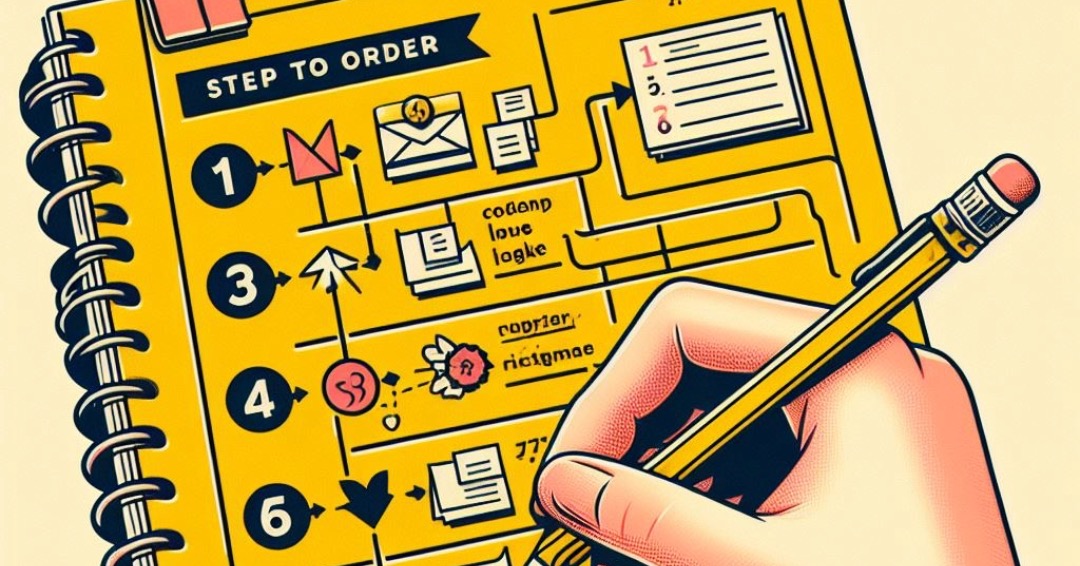
Maintaining accurate and up-to-date citations is a crucial aspect of scholarly writing and research documentation. AI-powered tools have significantly enhanced the ability to automate the process of detecting outdated or incorrect citations, ensuring the integrity and reliability of academic work. By leveraging AI, researchers and writers can streamline the management of citation data, reduce manual errors, and ensure compliance with evolving citation standards such as APA.
This section explores how AI technologies facilitate the automatic identification of citation inaccuracies, generate corrected citations following APA guidelines, and establish dynamic workflows for updating citation lists as source details change over time.
Detecting Outdated or Incorrect Citation Entries
AI systems can analyze large citation datasets with high efficiency, identifying inconsistencies and outdated information that may not be evident through manual review. This process involves cross-referencing existing citation entries with authoritative databases, such as CrossRef, PubMed, or publisher-specific repositories. AI models trained on citation patterns learn to recognize anomalies, such as misformatted entries, incorrect author names, publication years, or DOI mismatches.
- AI algorithms scan citation lists to identify discrepancies by comparing entries against current authoritative sources.
- Natural language processing (NLP) techniques interpret citation components, flagging those that deviate from APA standards or contain outdated publication details.
- Machine learning models continuously improve detection accuracy by learning from user corrections and new citation patterns.
“AI-driven detection minimizes manual oversight, ensuring citation accuracy aligns with the latest publication data and APA formatting rules.”
Generating Corrected Citations Following APA Guidelines
Once outdated or erroneous citations are identified, AI tools can automatically generate corrected entries adhering to APA standards. This process involves parsing the original citation, extracting relevant details, and reconstructing the citation with correct punctuation, order, and formatting, according to the latest APA edition guidelines.
- The AI system utilizes predefined templates aligned with APA style, populating them with verified source information.
- In cases of incomplete or ambiguous data, AI can infer missing details by consulting external databases or prompting user input for clarification.
- The corrected citations are presented for review, allowing users to approve or make minor adjustments before final incorporation.
| Original Citation | AI-Generated Corrected Citation |
|---|---|
| Smith, J. (2019). Research methods. | Smith, J. (2019).
Research methods*. New York, NY Academic Press. |
Creating a Workflow for Updating Citation Lists as Sources Change
Establishing an automated workflow ensures that citation lists remain current as source details evolve over time, such as new editions, updated URLs, or corrected author information. AI can facilitate this dynamic updating process through integrated systems that monitor source repositories, publication updates, and citation metadata.
- Integration with external databases allows AI to track changes in source records continuously.
- When updates are detected, AI flags the affected citations within the document or reference list.
- The system automatically retrieves the latest source data, verifies the accuracy, and regenerates the citation in APA format.
- Automated notifications can inform users about the updates, prompting review and confirmation.
- The updated citations replace old entries in the document’s reference list, ensuring ongoing consistency and accuracy.
This workflow minimizes manual intervention, reduces the risk of outdated references, and sustains adherence to APA citation standards as source information evolves.
Generating Reference Lists in APA with AI Assistance
Creating a comprehensive and correctly formatted reference list is fundamental to academic writing, ensuring sources are credited appropriately and readers can access original materials. Leveraging AI tools significantly streamlines this process by automating the compilation of references from organized citations, reducing manual effort, and minimizing errors. This section explores the steps for AI to generate a properly formatted APA reference list, provides sample HTML code for presenting this list in a responsive table, and discusses methods to ensure consistency and adherence to APA style guidelines.
Utilizing AI to compile reference lists enhances efficiency and accuracy, particularly when managing extensive sources. By automating the formatting process, researchers can focus more on content quality while maintaining strict compliance with APA standards. Ensuring the output adheres to APA rules involves implementing validation checks and leveraging AI’s pattern recognition capabilities to recognize and apply formatting conventions consistently across the entire reference list.
Steps for AI to Compile a Formatted Reference List from Organized Citations
Transforming organized citation data into a formatted reference list involves several systematic steps that AI can execute reliably. These steps ensure that each citation conforms to APA standards and is presented uniformly, facilitating clarity and professionalism in scholarly documents.
- Extract and Normalize Citation Data: AI begins by retrieving organized citation details, such as author names, publication years, titles, source types, and other relevant information. Normalization involves standardizing data formats to facilitate uniform processing.
- Apply APA Formatting Rules: The AI references a comprehensive set of APA guidelines, including rules for author names, publication dates, titles, source details, and punctuation. It identifies citation types—journal articles, books, websites—and applies specific formatting accordingly.
- Format Each Citation: Using the normalized data, AI constructs each reference entry, ensuring elements are correctly ordered and punctuated. For example, author names are formatted as Last Name, Initials, and titles are italicized when appropriate.
- Validate and Correct Formatting: The AI performs validation checks to identify inconsistencies or deviations from APA standards, such as missing elements or incorrect punctuation, and corrects them automatically.
- Compile the Complete Reference List: Once individual citations are formatted, the AI assembles them into an ordered list, typically alphabetized by author surname, ready for presentation.
Sample HTML Code for a Responsive Reference List Table
Presenting the generated reference list in a clear, accessible manner enhances readability and usability. A responsive HTML table adapts seamlessly to various screen sizes, making it suitable for digital documents and online platforms.
<table style="width:100%; border-collapse: collapse;">
  <thead>
    <tr>
      <th style="border: 1px solid #ddd; padding: 8px; background-color: #f2f2f2;">Author(s)</th>
      <th style="border: 1px solid #ddd; padding: 8px; background-color: #f2f2f2;">Year</th>
      <th style="border: 1px solid #ddd; padding: 8px; background-color: #f2f2f2;">Title</th>
      <th style="border: 1px solid #ddd; padding: 8px; background-color: #f2f2f2;">Source</th>
    </tr>
  </thead>
  <tbody>
    <tr>
      <td style="border: 1px solid #ddd; padding: 8px;">Smith, J. A., & Lee, K. T.</td>
      <td style="border: 1px solid #ddd; padding: 8px;">2021</td>
      <td style="border: 1px solid #ddd; padding: 8px;">Advances in AI Research</td>
      <td style="border: 1px solid #ddd; padding: 8px;">Journal of Modern Technology, 15(3), 234-250</td>
    </tr>
    <tr>
      <td style="border: 1px solid #ddd; padding: 8px;">Doe, R. B.</td>
      <td style="border: 1px solid #ddd; padding: 8px;">2019</td>
      <td style="border: 1px solid #ddd; padding: 8px;">Understanding Machine Learning</td>
      <td style="border: 1px solid #ddd; padding: 8px;">TechPress Publishing</td>
    </tr>
  </tbody>
</table>
The above table structure ensures a neat presentation, with each citation element in designated columns, making it easy to scan and interpret entries across different devices and screen sizes.
Methods to Ensure Consistency and Adherence to APA Formatting Rules
Maintaining consistency and strict adherence to APA formatting standards is crucial for the credibility and professionalism of scholarly work. AI can employ several techniques to uphold these standards throughout the reference list.
Validation Algorithms: Implement rule-based validation algorithms that check each citation against APA guidelines, flagging deviations such as incorrect author formatting, punctuation errors, or missing components.
Pattern Recognition: Use pattern recognition models trained on correctly formatted APA references to identify and correct inconsistencies in real-time, ensuring uniformity in style and structure.
Automated Style Enforcement: Integrate style enforcement modules that automatically adjust font styles, italics, capitalization, and punctuation according to APA standards, reducing manual corrections.
Regular Updates: Keep the AI’s reference formatting rules updated with the latest editions of APA guidelines, ensuring ongoing compliance as standards evolve.
User Feedback Integration: Incorporate user feedback mechanisms to continuously improve AI accuracy, addressing common formatting issues reported by users and refining correction algorithms accordingly.
Best practices for integrating AI-organized citations into academic documents
Effective integration of AI-organized citations into academic work enhances both accuracy and efficiency, ensuring that scholarly standards are maintained throughout the writing process. Employing AI tools to manage citations provides a streamlined approach, but it requires careful implementation to maximize benefits and minimize errors. Adhering to best practices helps preserve the integrity of the research and simplifies the transition from initial data collection to polished final documents.Integrating AI-organized citations into academic documents involves multiple stages, including exporting citation data into word processors, maintaining accuracy during revisions, and automating in-text citations alongside reference lists.
These practices foster consistency, reduce manual errors, and improve overall document quality, especially when handling multiple sources or complex referencing requirements.
Guidelines for exporting citation lists into word processors or document editors
When incorporating AI-generated citation lists into academic papers, it is essential to use reliable export formats compatible with common word processing software such as Microsoft Word or Google Docs. Typically, citation management tools support formats like RIS, BibTeX, or direct export to Word-compatible XML files. These formats preserve the citation metadata, allowing seamless import and integration.Before exporting, ensure that your AI tool has correctly formatted all citations according to APA standards.
Review the exported data to verify that all entries include necessary details such as author names, publication years, titles, and source information. After export, utilize the citation management features within your word processor or dedicated reference management software to insert the citations accurately into the document.To facilitate smooth integration, consider utilizing plugins or add-ins designed for your word processor—such as EndNote, Zotero, or Mendeley—that support direct import of AI-generated citation files.
These tools often provide the functionality to insert citations dynamically, which updates automatically when the reference list is modified.
Tips for maintaining citation accuracy throughout the writing process
Accurate citations are fundamental to preserving academic integrity and ensuring traceability of sources. During the writing process, it is important to regularly verify that each in-text citation corresponds correctly with the references listed and adheres to APA format. AI tools may occasionally generate discrepancies due to data mismatches, necessitating manual review.Establish a routine to cross-check each citation against the original source data exported from the AI tool.
This practice helps identify and correct inconsistencies or formatting errors early. Employ the preview features of your citation management software to see how citations will appear within your document, and adjust as necessary.Maintain version control by saving incremental drafts of your document, especially after major revisions, so that citation data remains consistent. Employ automated citation checking features available in some AI tools or reference managers that flag potential errors or missing information.
This proactive approach ensures ongoing accuracy as the document evolves.
Strategies for automating in-text citations and reference list management
Automating in-text citations alongside reference list management minimizes manual effort and reduces the likelihood of errors. Modern AI and reference management tools can dynamically insert in-text citations based on your source database, updating them automatically as you add or remove references.Implement citation plugins within your word processor that support real-time synchronization with your citation database. When you insert an in-text citation, the software formats it according to APA style and links it to the corresponding reference in the list.
If any source details change—such as author names or publication dates—the updates propagate automatically throughout the document.Leverage AI-powered features that identify citation gaps or inconsistencies, prompting corrections before final submission. Additionally, use templates and style guidelines within your reference management tools to enforce APA compliance across all citations. This integrated approach streamlines the process, allowing focus on content quality while ensuring citation accuracy and consistency.
Final Review

In conclusion, utilizing AI to organize citations in APA style offers a powerful way to optimize academic workflows. By automating data collection, formatting, and updates, researchers can focus more on content quality while maintaining precise and consistent references. Embracing these technological advancements ensures your scholarly work remains accurate, professional, and up-to-date.