Discovering effective ways to improve the clarity of a thesis with AI can significantly enhance your academic writing process. Utilizing advanced AI tools and techniques enables researchers and students to craft more precise, coherent, and impactful theses. This guide explores practical strategies, suitable tools, and best practices to incorporate AI into your revision and editing workflow, ensuring your research communicates its ideas effectively and convincingly.
Tools and Software for Improving Thesis Precision

Enhancing the clarity and accuracy of a thesis is crucial for effective academic communication. Leveraging AI-powered writing tools can significantly streamline the editing process, ensuring that the thesis meets scholarly standards and is easily comprehensible. Several innovative software options are available, each offering unique features tailored to support researchers and students in refining their work.
These AI-driven tools provide functionalities such as grammar correction, style enhancement, contextual suggestions, and discipline-specific terminology adjustments. Selecting the right software depends on understanding their capabilities, costs, and user-friendliness, which can influence the efficiency of the editing process and the quality of the final manuscript.
Popular AI-Powered Writing Assistants Suitable for Thesis Editing
Several AI-based writing assistants have gained popularity among academics for their ability to improve thesis clarity and precision. These tools incorporate advanced natural language processing algorithms to analyze, suggest, and correct language issues, making them valuable assets during the editing phase.
| Tool/Software | Key Features | Pricing | Usability |
|---|---|---|---|
| Grammarly | Grammar correction, style suggestions, plagiarism detection, tone adjustment | Free basic version; Premium plans start at approximately $12/month | User-friendly interface with browser extension and desktop app |
| ProWritingAid | In-depth grammar and style analysis, readability improvement, genre-specific suggestions | Approximately $70/year; offers free version with limitations | Integrates with MS Word, Google Docs, and Scrivener; suitable for detailed editing |
| Writefull | Contextual language feedback, discipline-specific phrase suggestions, writing analytics | Subscription model; pricing varies based on usage; educational discounts available | Designed for academic writing; integrates with Overleaf and MS Word |
| QuillBot | Paraphrasing, summarization, grammar checking, vocabulary enhancement | Free version; Premium starts at around $20/month | Intuitive interface; browser extension and desktop app options |
Each of these tools offers distinct advantages, and their effectiveness depends on the specific editing needs and discipline standards of the thesis. Combining multiple tools can often provide a comprehensive editing experience, addressing different aspects of clarity and precision.
Best Practices for Selecting the Right AI Software Based on Academic Needs
Choosing an appropriate AI-powered editing tool requires careful consideration of the specific requirements of the thesis and the research discipline. The following best practices can guide researchers and students in making informed decisions:
- Identify the primary editing needs—whether it is grammar correction, stylistic refinement, or discipline-specific terminology consistency.
- Assess the compatibility of the software with the preferred writing environment, such as Microsoft Word, Google Docs, or LaTeX.
- Evaluate the level of customization offered, especially for disciplines with specialized language or formatting standards.
- Consider the cost relative to the available budget, and explore free trial options to test usability and feature relevance.
- Review user feedback and expert recommendations, particularly from peers within the same academic field.
- Verify the software’s ability to handle large documents and provide detailed reports for comprehensive editing.
Procedures for Customizing AI Tools to Align with Academic Discipline Standards
To maximize the benefits of AI editing tools, it is essential to tailor their functionalities to meet specific academic standards and discipline-specific language conventions. The following procedures facilitate effective customization:
- Configure language and style settings within the software to match the target journal’s or institution’s guidelines, including citation styles and formatting preferences.
- Utilize discipline-specific dictionaries or glossaries if available, ensuring the AI tool recognizes technical terminology and jargon relevant to the field.
- Implement custom rule sets or plugins that emphasize particular stylistic elements, such as passive voice avoidance in social sciences or precise technical descriptions in engineering.
- Integrate the AI tool with reference management software to ensure consistency in citations and bibliographies.
- Conduct trial runs with sample thesis sections to identify and adjust settings that improve contextual accuracy and discipline alignment.
- Provide ongoing feedback to the software developers or use built-in training features to enhance the tool’s understanding of discipline-specific language over time.
Regular updates and adaptations are critical, especially as academic standards evolve. Maintaining alignment with disciplinary norms ensures that the thesis not only reads clearly but also adheres to the scholarly expectations of the field.
Techniques for Structuring a Clear and Cohesive Thesis

Establishing a well-structured thesis is fundamental to effectively communicating research findings and achieving clarity. When the components of a thesis are organized logically and cohesively, readers can follow the progression of ideas seamlessly, enhancing comprehension and impact. Leveraging AI tools can significantly streamline this process by assisting in the development, analysis, and refinement of thesis components, ensuring that each section aligns with the overall research objectives and maintains clarity throughout.A systematic approach to structuring a thesis involves carefully designing each component—from the introduction and objectives to hypotheses and supporting arguments—so they build upon each other coherently.
AI-driven templates and analysis methods enable researchers to craft these sections with precision, ensuring that transitions between paragraphs and sections are smooth and logical. Visual aids such as tables and diagrams generated by AI can illustrate the overall thesis structure, highlighting the relationships between components and providing a clear roadmap for readers.
Organizing Thesis Components for Enhanced Logical Flow
Effective organization of thesis sections starts with defining a logical sequence that guides the reader naturally from the problem statement through to conclusions. This involves:
- Developing a clear introduction that contextualizes the research problem and states the significance of the study.
- Outlining specific objectives that directly address the research questions, ensuring each objective logically follows from the introduction.
- Formulating hypotheses that are testable and aligned with the objectives, providing a basis for the analysis that follows.
- Structuring main body sections to systematically present literature review, methodology, results, and discussion in a manner that supports the thesis narrative.
AI can assist in analyzing the structure of existing chapters or sections, identifying gaps or redundancies, and suggesting reordering for improved clarity.
Templates for Organizing Introductions, Objectives, and Hypotheses with AI Support
Using AI-supported templates ensures consistency and clarity across thesis components. These templates can be customized based on the research area and specific requirements, providing frameworks such as:
- Introduction Template: Begin with a broad context, narrow down to the specific problem, and conclude with the research significance and overview of the thesis structure.
- Objectives Template: List clear, concise objectives that directly relate to the research problem, often formatted as actionable statements.
- Hypotheses Template: State hypotheses as testable predictions, often framed as null and alternative hypotheses, supported by rationale derived from literature review.
AI tools can generate these templates automatically, adapt them to specific research contexts, and provide suggestions to improve clarity or completeness.
Procedures for Using AI to Analyze and Enhance Paragraph Transitions
Smooth paragraph transitions are crucial for maintaining logical flow. AI can facilitate this by:
- Analyzing the coherence between consecutive paragraphs using natural language processing algorithms to identify abrupt shifts or inconsistencies.
- Suggesting transitional phrases or sentences that explicitly link ideas, such as “Building on the previous section,” or “Conversely,” to guide the reader seamlessly.
- Recommending rearrangements of sentences or paragraphs to improve logical progression based on contextual analysis.
For example, an AI tool might highlight where a paragraph abruptly shifts topics and propose modifications to include transitional expressions, thereby enhancing overall readability.
Visual Aids Generated by AI to Illustrate Thesis Structure
Visual representations like tables and diagrams created by AI can significantly clarify the thesis framework for readers. Examples include:
| Component | Description | Purpose |
|---|---|---|
| Thesis Artikel Diagram | A hierarchical tree diagram illustrating main sections and subsections, showing how each part connects to the thesis objectives. | Provides a visual roadmap, helping authors verify logical sequencing and readers grasp the overall structure swiftly. |
| Flowchart of Argument Development | Steps illustrating how evidence and analysis lead to conclusions, with decision points highlighted. | Enhances understanding of argument progression and ensures coherence between evidence and claims. |
| Timeline Table for Project Milestones | Gantt-style table showing phases of thesis development, including deadlines for drafts, revisions, and submission. | Assists in planning and tracking progress, ensuring logical pacing of research activities. |
AI-generated diagrams can be customized to reflect the unique structure of any thesis, making complex organizational relationships visually accessible and easier to refine.
Using AI to Enhance Argument Development and Evidence Support

Integrating AI into thesis development not only streamlines the writing process but also significantly enhances the depth and robustness of arguments. By leveraging AI tools, writers can generate comprehensive supporting evidence, anticipate and formulate counterarguments, and organize complex ideas into clear, logical structures. This approach ensures the thesis is compelling, well-supported, and resilient against critical scrutiny.
AI-powered solutions facilitate the development of nuanced arguments by providing access to a vast array of relevant data, scholarly articles, and statistical evidence. Additionally, these tools assist in constructing organized argument maps that visually depict relationships among claims, evidence, and counterpoints. They also refine thesis claims by suggesting pertinent examples and data, making the argumentation more persuasive and data-driven. Embedding AI-generated tables and bullet points further clarifies complex points, making the thesis accessible and impactful for diverse audiences.
Leveraging AI for Generating Supporting Evidence and Counterarguments
Effective thesis development depends on the availability of solid evidence and well-considered counterpoints. AI tools can automatically retrieve and synthesize relevant data, literature, and case studies from vast digital repositories, ensuring that supporting evidence is comprehensive and current. For example, when crafting an argument about climate change impacts, AI can generate recent statistics, peer-reviewed research findings, and real-world case examples, enabling the writer to substantiate claims convincingly.
“AI can analyze large datasets to identify patterns and correlations that support your thesis, providing a data-driven foundation for your arguments.”
Furthermore, AI can simulate potential counterarguments by analyzing opposing perspectives in the literature or online discourse. This enables writers to anticipate objections, address them proactively, and strengthen their position with rebuttals supported by evidence. Using AI-generated counterpoints encourages a balanced, credible argumentation style that withstands critique.
Creating Structured Argument Maps with AI Assistance
Organizing complex arguments into coherent structures is vital for clarity and persuasive power. AI-powered argument mapping tools can help visualize the relationships between main claims, sub-claims, supporting evidence, and counterarguments. These visual maps enable writers to see the logical flow of their thesis and identify potential gaps or inconsistencies before finalizing the document.
- Input your primary thesis and related claims into the AI tool, which then suggests logical connections and hierarchies among points.
- The AI visually arranges these points into structured diagrams, highlighting dependencies and supporting evidence for each claim.
- Writers can iteratively refine these maps, ensuring that each component logically supports the overarching argument and that counterarguments are integrated seamlessly.
This method promotes clarity by breaking down complex ideas into manageable, interconnected components, ultimately leading to a more cohesive thesis narrative.
Refining Thesis Claims with Relevant Data and Examples
AI can significantly bolster the credibility of thesis claims by providing relevant, contextual data and illustrative examples. When a claim is made, AI algorithms can locate recent statistics, authoritative reports, and case studies that exemplify the point. For example, if the thesis states that renewable energy reduces carbon footprints, AI can supply specific data from global energy reports, success stories from countries like Denmark or Costa Rica, and recent advancements in solar and wind technology.
“Embedding compelling evidence from AI-identified data enhances the persuasiveness and validity of your thesis claims.”
Additionally, AI can suggest real-world scenarios, historical events, or expert opinions that serve as potent examples, making abstract claims tangible and relatable. This approach ensures the thesis is grounded in factual evidence and examples, improving its overall credibility and impact.
Embedding AI-Generated Tables and Bullet Points for Clarity
Complex points and dense data are often challenging to grasp quickly. AI tools can generate well-structured tables and bullet points that distill intricate information into clear, digestible formats. For instance, an AI can compile comparative tables showing different renewable energy sources, including their costs, efficiencies, and environmental impacts, facilitating quick understanding.
“Tables and bullet points created by AI enable easy comparison and quick grasp of key points, making complex data accessible.”
AI-generated bullet points can summarize multiple supporting facts, counterarguments, or data points, creating a concise overview that enhances the thesis’s readability and coherence. These visual aids are particularly useful when explaining multifaceted concepts or presenting large datasets, ensuring that readers can easily follow and interpret the information presented.
Refining Language and Style for Greater Clarity

Ensuring that a thesis communicates ideas effectively depends not only on the correctness of content but also on the precision and consistency of language. Leveraging AI tools can significantly enhance the clarity, tone, and overall readability of academic writing. By systematically analyzing and adjusting language use, students and researchers can produce a more polished, professional, and impactful thesis.Effective refinement of language involves targeted techniques that identify vague or ambiguous phrases, suggest clearer alternatives, and maintain a consistent tone throughout the document.
Proper integration of AI-generated suggestions into the final draft requires strategic procedures to ensure that adjustments align with the author’s voice and academic standards.
Techniques for Using AI to Improve Sentence Clarity and Tone Consistency
Improving sentence clarity and maintaining a consistent tone are essential for conveying complex ideas succinctly and professionally. AI tools can assist in these areas through several techniques:
- Utilize AI-powered grammar and style checkers to identify convoluted or lengthy sentences that obscure meaning. These tools often suggest sentence restructuring or simplification.
- Apply tone analysis features within AI software to ensure that the language remains formal, objective, and aligned with academic conventions. Adjustments can include replacing informal phrases with formal equivalents or removing emotional language that distracts from the argument.
- Employ AI to monitor sentence length and complexity, encouraging concise expression without sacrificing necessary detail. Shorter, clearer sentences enhance the reader’s understanding.
Procedures for Analyzing Writing Style and Making Targeted Adjustments with AI
A structured approach to style analysis enables writers to identify specific areas for improvement systematically. The following procedures facilitate effective use of AI:
- Run the thesis or selected sections through AI-based stylistic analysis tools, which evaluate sentence structure, vocabulary consistency, and overall tone.
- Review AI-generated reports highlighting areas of ambiguity, redundancy, or inconsistent style, focusing on sections where clarity can be enhanced.
- Identify patterns in language use, such as frequent passive voice, overly complex constructions, or vague terminology.
- Make targeted adjustments by accepting AI suggestions, while ensuring that changes reflect the intended meaning and maintain academic integrity.
- Reassess the revised text with AI tools to verify improvements and detect any new issues introduced during editing.
Explaining AI Suggestions for Clarifying Vague or Ambiguous Phrases
Vague or ambiguous phrases can undermine the clarity of a thesis. AI tools excel in recognizing such expressions and providing clearer alternatives:
For example, when encountering the phrase “significant impact,” AI may suggest specifying the nature or scope of the impact, such as “a 25% increase in efficiency” or “a notable improvement in data accuracy.”
AI analyzes the context of ambiguous phrases by examining surrounding sentences and common usage patterns. It then offers alternatives that specify, quantify, or contextualize vague expressions, thereby improving precision. For instance:
- Replacing vague adjectives like “large,” “small,” or “considerable” with specific measurements or descriptive terms.
- Transforming general statements such as “many researchers agree” into precise attributions like “seven out of ten recent studies support.”
This process ensures that each statement contributes concretely to the argument, reducing misunderstandings and enhancing impact.
Guidelines for Integrating AI Suggestions into Final Thesis Drafts
Integrating AI suggestions efficiently requires a careful, methodical approach that preserves the author’s voice and academic standards:
- Review all AI-generated recommendations carefully, considering the context and relevance of each suggestion before acceptance.
- Prioritize modifications that significantly improve clarity, coherence, or tone, while avoiding over-reliance on automated suggestions that may overlook nuanced meanings.
- Maintain a record of accepted changes, especially when adjusting phrasing or tone, to ensure consistency throughout the thesis.
- After integrating AI suggestions, conduct a comprehensive review of the entire document to check for consistency in style, vocabulary, and formal tone.
- Use a final proofreading step, ideally with human oversight, to catch any subtle issues that AI tools might miss, such as nuanced argumentation or context-specific phrasing.
Following these guidelines ensures that AI assistance enhances the clarity and professionalism of the thesis without compromising the author’s unique voice and academic rigor.
Wrap-Up
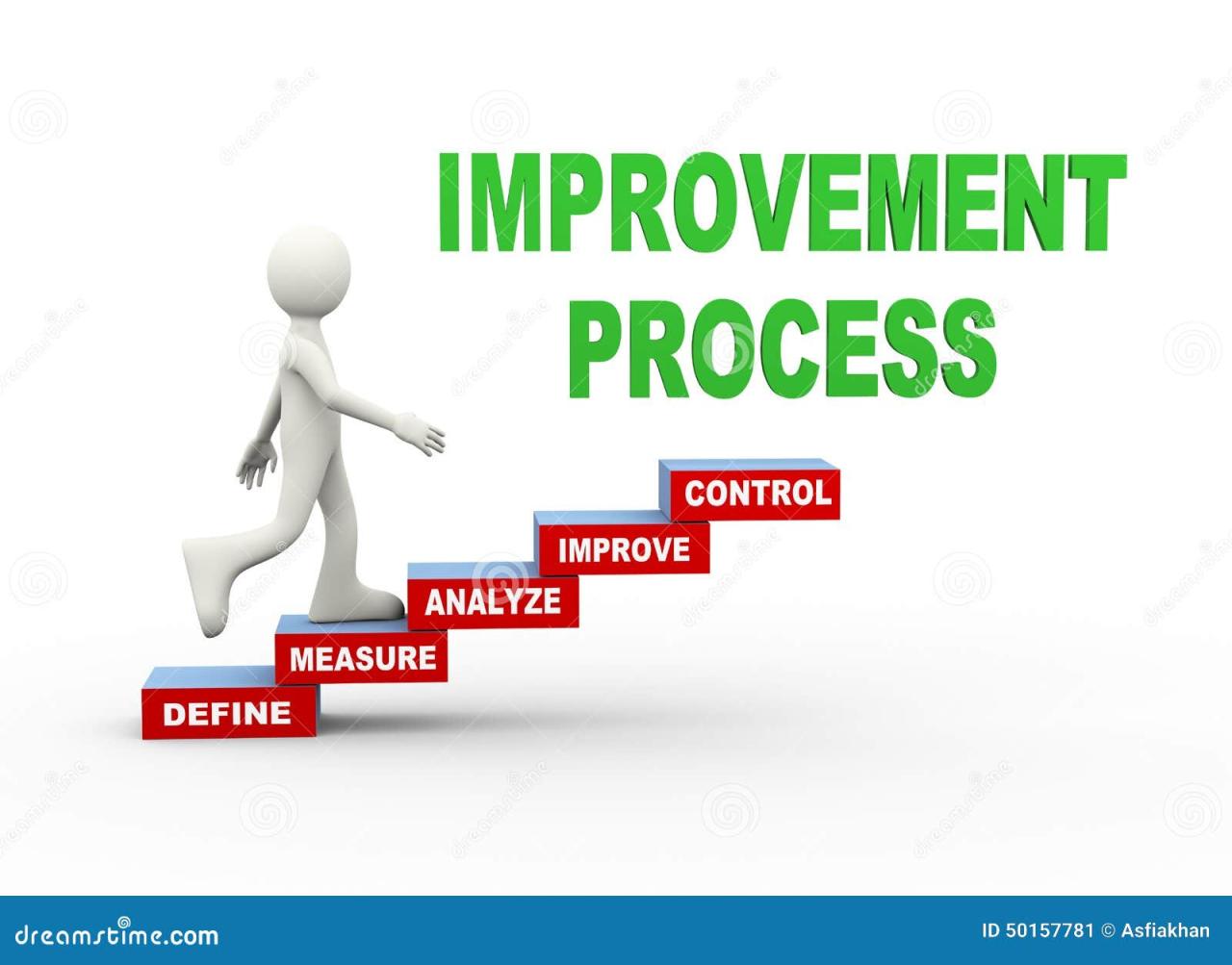
In conclusion, integrating AI into the thesis development process offers powerful benefits for clarity and coherence. By leveraging these technologies thoughtfully, writers can produce more polished, focused, and persuasive research documents. Embracing AI-driven refinement ultimately leads to clearer communication and stronger academic impact.