Learning how to generate in-text citations with AI is essential for ensuring accuracy and efficiency in academic and professional writing. Proper citations not only give credit to original sources but also enhance the credibility of your work. Leveraging AI tools can simplify this process by automatically creating precise citations tailored to various style guides, saving time and minimizing errors.
This guide explores the methods of generating in-text citations using AI, covers different citation styles such as APA, MLA, and Chicago, and provides practical procedures for integrating these citations into your documents. Whether you’re working with Word, LaTeX, or Markdown, understanding how AI can assist will streamline your referencing tasks and uphold scholarly standards.
Understanding In-Text Citations with AI
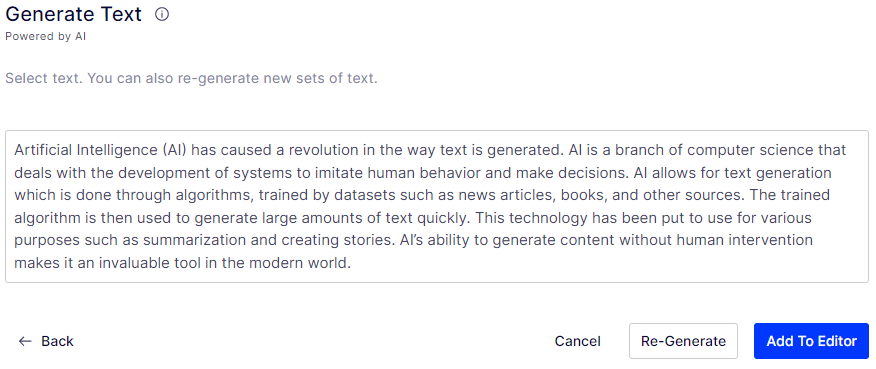
In academic and professional writing, in-text citations serve as an essential tool for acknowledging sources, ensuring credibility, and allowing readers to trace the origin of information. Proper citation practices not only uphold intellectual integrity but also enhance the clarity and reliability of the document. With the advancements in artificial intelligence, generating accurate in-text citations has become more streamlined, enabling writers to focus on content creation while maintaining adherence to citation standards.
AI-powered tools can assist in automatically identifying relevant source details, formatting citations correctly, and integrating them seamlessly within the text.
In-text citations typically involve specific components that collectively provide sufficient information about the source being referenced. These components include the author’s name, publication year, and, when applicable, page or paragraph numbers. Accurate inclusion of these elements allows readers to verify sources quickly and supports the overall transparency of scholarly communication. By leveraging AI, writers can minimize errors associated with manual citation formatting, ensure consistency across documents, and save valuable time during the writing process.
Components Involved in In-Text Citations
Understanding the essential elements that comprise in-text citations is pivotal for producing clear and correct references. These components are integral to conforming with various citation styles such as APA, MLA, or Chicago. Each style has specific rules for formatting these elements, but the core information remains consistent.
AI tools can analyze source data to extract and organize these components, facilitating the creation of accurate citations tailored to the required style. For example, when citing a book, the AI might identify the author, publication year, and page number; for online articles, it recognizes the author, publication date, and URL if necessary.
- Author’s Name: Represents the individual or organization responsible for the content. AI can parse author details from various formats, ensuring correct spelling and order, especially when multiple authors are involved.
- Publication Year: Indicates when the source was published. AI can extract this information from metadata, digital sources, or citation databases, reducing the risk of outdated or incorrect dates.
- Page or Paragraph Number: Pinpoints specific sections of a source, crucial for direct quotations or detailed references. AI can identify page numbers from scanned documents, PDFs, or online sources, and include them appropriately in the citation.
“Accurate in-text citations are vital for maintaining academic integrity and enabling readers to locate original sources effortlessly.”
In summary, AI significantly enhances the process of generating precise in-text citations by automating the extraction and formatting of essential source components. This integration ensures that references are consistent, accurate, and compliant with scholarly standards, thereby supporting the overall quality and credibility of academic writing.
Methods for Generating In-Text Citations Using AI
Incorporating accurate in-text citations is essential for maintaining academic integrity and supporting scholarly work. Leveraging AI tools streamlines this process by converting bibliographic information into properly formatted citations according to various style guides. This section explores practical, step-by-step methods for inputting source data into AI platforms to generate in-text citations efficiently, ensuring consistency and adherence to specific formatting standards across different citation styles.
By understanding these methods, users can easily automate citation generation, reduce manual errors, and focus more on the content quality of their research or writing projects. The following procedures Artikel how to utilize AI tools effectively for this purpose, along with a comparative overview of common citation styles such as APA, MLA, and Chicago, highlighting their unique requirements for in-text citations.
Procedures for Inputting Source Information into AI Tools
- Prepare Complete Source Data: Gather essential bibliographic details, including author(s) name(s), publication year, title, publisher, and page numbers if applicable. Ensuring accuracy at this stage is critical for correct citation output.
- Access an AI Citation Generator: Use a reliable AI-based citation tool or software that supports multiple citation styles. Examples include Citation Machine AI, Zotero, or custom AI models integrated into word processors.
- Input Source Details: Enter the bibliographic information into the designated fields provided by the AI tool. For instance, input the author’s name, publication year, and relevant page numbers where necessary.
- Select Citation Style: Choose the desired citation style (APA, MLA, Chicago, etc.) from the available options within the tool to tailor the output accordingly.
- Generate Citation: Click the generate or create button to obtain the formatted in-text citation. Review the generated citation for accuracy and completeness.
- Insert into Document: Place the AI-generated in-text citation at the appropriate point within your text, ensuring it aligns with your referencing conventions.
Organization of Different Citation Styles
Different academic disciplines and publications adhere to specific style guides, each with unique rules for in-text citations. An understanding of these differences enhances the correct application of citations in various contexts. The following overview provides clarity on the formatting standards for APA, MLA, and Chicago styles.
| Style | Format | Examples | Notes |
|---|---|---|---|
| APA | Author’s last name and publication year, separated by a comma, with page numbers if applicable, enclosed in parentheses. |
|
Typically used in social sciences; emphasizes the date of publication. |
| MLA | Author’s last name and page number(s), without a comma, within parentheses. |
|
Common in humanities; focuses on the author and page number. |
| Chicago | Author’s last name, publication year, and page number(s), separated by commas, within parentheses. |
|
Widely used in history and some social sciences; offers both author-date and note formats. |
Procedures for Integrating AI-Generated Citations into Documents
Effectively embedding AI-generated citations into various document formats is essential for maintaining academic integrity and ensuring clarity in referencing sources. The integration process differs based on the document type, requiring tailored techniques to ensure seamless insertion, easy update, and consistent formatting. Mastering these procedures allows users to streamline their workflow while preserving the accuracy and professionalism of their work.
Incorporating AI-generated citations involves understanding how to embed them within popular document formats such as Word, LaTeX, and Markdown. Additionally, it is crucial to learn how to update or modify citations as new information becomes available or as sources evolve. Providing a versatile template for inserting in-text citations enhances consistency across different types of content, facilitating a smooth and efficient citation management process.
Embedding AI-Generated Citations into Various Document Types
Embedding citations correctly depends on the specific formatting conventions of each document type. Proper integration ensures that citations are clear, accessible, and conform to style guidelines such as APA, MLA, or Chicago. Below are techniques suited for common document formats:
- Microsoft Word: Utilize the built-in referencing tools or manually insert citations. When using AI tools, copy the generated citation text and insert it directly into the document at the relevant location. Use the “Insert Citation” feature to link citations to a reference list for automatic updates. Alternatively, for manual insertion, ensure the citation is formatted consistently and placed within parentheses or as a footnote, depending on style requirements.
- LaTeX: Integrate citations using BibTeX or BibLaTeX. AI tools typically output citations in BibTeX format, which can be imported into a .bib file. In the LaTeX document, employ commands like \citekey to insert citations. This approach allows for easy updates and consistent formatting across the document. Ensure that the citation keys match those in the bibliography file for seamless referencing.
- Markdown: Embed citations inline using parentheses or brackets, often in conjunction with reference management tools like Zotero or EndNote. Alternatively, use footnotes for citations, which provide clarity without cluttering the main text. For static documents, manually insert the in-text citation following the chosen style, making sure to update the reference list accordingly.
Updating or Modifying Citations Using AI Outputs
As research progresses or sources are refined, updating citations becomes necessary to preserve document accuracy. AI-generated citations can be modified effectively through a systematic approach that maintains consistency and integrity. Here are key techniques:
- Re-Generation of Citations: Rerun the AI tool with the latest source data to obtain updated citation formats. Compare the new output with the existing citation to identify discrepancies or improvements.
- Manual Editing: For minor modifications, directly edit the inserted citation within the document. Ensure that the formatting aligns with the style guide. When using reference management software, update the source metadata—such as author names, publication years, or page numbers—which will automatically reflect in the generated citation.
- Version Control: Keep a record of citation versions to track changes over time. This practice helps in maintaining consistency, especially in collaborative environments or lengthy projects.
Template for Seamless In-Text Citation Insertion
(Author Last Name, Year) (Smith, 2022) [Author Last Name, Year] [Johnson, 2020], Year.
This template can be adapted for various document types and citation styles, facilitating consistent and quick integration of AI-generated references. It supports manual editing and automated scripts, ensuring flexibility in different workflows. When inserting citations, replace placeholder information with the actual authorship and publication year data provided by AI tools, ensuring accuracy and conformity to style guidelines.
Examples of AI-Generated In-Text Citations
Generating accurate in-text citations is essential for maintaining credibility and scholarly integrity in academic writing. With the integration of AI tools, it is now possible to produce correctly formatted citations effortlessly across various source types. Demonstrating concrete examples of these AI-generated citations in different styles can help users understand their practical application and adaptability in real-world contexts.
Below, multiple sample texts illustrate how AI can embed in-text citations originating from diverse sources such as books, journal articles, and websites. These examples showcase the versatility of AI in adhering to different citation styles and formats, thereby streamlining the research and writing process for users.
Sample In-Text Citations from Different Source Types
Here are practical examples demonstrating how AI can generate in-text citations for various source types, formatted according to common academic styles such as APA, MLA, and Chicago. Each example emphasizes the importance of precise citation integration within the narrative, ensuring clarity and proper attribution.
-
Book Source (APA style):
According to recent studies, the importance of cognitive development has increased in educational psychology (Smith, 2020).
In this example, the AI-generated citation includes the author’s last name and publication year, consistent with APA formatting, integrated seamlessly into the sentence.
-
Journal Article (MLA style):
Research indicates significant shifts in climate patterns over the past decade (Johnson 45).
The AI accurately produces an MLA-style in-text citation, including the author’s last name and the page number, without disrupting the flow of the text.
-
Website Content (Chicago style):
Recent data from the World Health Organization highlights the global increase in health awareness (WHO 2022).
For Chicago style, the AI inserts the authoring organization and year, maintaining consistency with conventional citation practices while ensuring readability.
These examples showcase the AI’s capability to adapt to different source types and citation formats, providing writers with reliable and correctly formatted in-text citations. Proper integration of these citations enhances the credibility of the document and facilitates seamless referencing for academic and professional purposes.
Best Practices and Troubleshooting

Ensuring the accuracy and consistency of in-text citations generated by AI is crucial for maintaining the credibility and integrity of scholarly and professional documents. While AI tools have greatly simplified citation processes, awareness of common pitfalls and adherence to best practices can significantly enhance citation quality. This section discusses typical errors encountered in AI-generated citations, methods for verification, tips for maintaining uniformity across multiple citations, and strategies for refining AI output to align with specific style guides.Maintaining accuracy and consistency in AI-generated citations requires a proactive approach.
Recognizing prevalent errors enables users to identify and correct issues before finalizing their documents. Additionally, understanding how to verify citations and apply best practices ensures that the citations are both reliable and stylistically consistent. The following subsections elaborate on these themes comprehensively.
Common Errors in AI-Generated Citations and Methods to Verify Accuracy
AI tools might occasionally produce citations with errors related to author names, publication dates, page numbers, or formatting inconsistencies. Such inaccuracies can stem from ambiguous input data or limitations within the AI model. Typical errors include misspelled author names, incorrect publication years, missing punctuation, or improper ordering of citation components.To verify the accuracy of AI-generated citations, it is essential to cross-reference each citation against authoritative sources such as official publication databases, journal websites, or style guide repositories.
Implementing a systematic review process involves checking each citation against original sources or trusted bibliographic databases like CrossRef, PubMed, or Google Scholar. Employing citation management tools, such as Zotero or EndNote, can assist in importing, validating, and formatting references according to specific style guides.
Tips for Maintaining Consistency Across Multiple Citations
Consistency across citations enhances the professionalism and readability of a document, especially when dealing with numerous references. To maintain uniformity, consider adhering to the following best practices:
Establish a reference style early, such as APA, MLA, or Chicago, and familiarize yourself thoroughly with its guidelines.
Use a centralized style guide or template within your writing environment to ensure uniform formatting of author names, date formats, punctuation, and order of citation elements.
Configure AI tools with specific style parameters or templates to automate consistent output across all citations.
Regularly review the generated citations to identify deviations or inconsistencies, updating the AI prompts or manual corrections as needed.
Maintain a master list of sources with standardized entries to prevent discrepancies when citing the same work multiple times.
Procedures for Editing or Refining AI Output for Adherence to Style Guides
Refining AI-generated citations involves editing for style compliance, accuracy, and clarity. To effectively refine output, follow these procedures:
- Compare the AI-generated citation against authoritative sources and official style guide examples to identify deviations.
- Utilize style guide resources to adjust punctuation, italics, capitalization, and order of citation components accordingly.
- Apply manual corrections to incomplete or inaccurate details, such as updating author names or publication years.
- Leverage citation management software to reformat AI outputs automatically, ensuring adherence to specific style nuances.
- Conduct final proofreading to confirm that all citations are correctly formatted and align with the document’s overall citation style.
Effective citation management combines AI efficiency with human oversight, ensuring both accuracy and stylistic conformity.
Troubleshooting Steps for Common Citation Issues
When encountering issues with AI-generated citations, employing a structured troubleshooting approach can resolve problems efficiently. The following steps Artikel a systematic process:
- Identify the Error: Determine whether the issue concerns incorrect data, formatting inconsistencies, or missing information.
- Verify Source Data: Cross-check the original source to confirm the correct bibliographic details.
- Review AI Input: Ensure that the prompt or input data provided to the AI was accurate and unambiguous.
- Adjust AI Settings or Prompts: Refine prompts by including explicit instructions or style specifications to improve output consistency.
- Use Validation Tools: Leverage citation-checking tools or databases to compare generated citations with authoritative records.
- Manual Correction: Correct discrepancies by editing the citation manually, referencing style guide requirements.
- Re-Generate or Re-Validate: After corrections, regenerate the citation or re-validate it to ensure accuracy and consistency.
Adhering to these best practices and troubleshooting steps will significantly enhance the reliability of AI-generated in-text citations, making them suitable for academic, professional, and publishing standards.
Ethical and Compliance Considerations
As artificial intelligence (AI) tools become increasingly integrated into academic and professional writing, it is vital to address the ethical and compliance aspects associated with AI-generated in-text citations. Responsible use of AI not only upholds academic integrity but also ensures that the generated content aligns with established standards and legal requirements. Awareness of these considerations helps prevent inadvertent plagiarism, misrepresentation, and violations of intellectual property rights, fostering trust and credibility in scholarly work.
Implementing ethical guidelines and compliance measures when utilizing AI for citation generation promotes transparency and accountability. It encourages users to verify AI outputs meticulously, thus maintaining the accuracy and reliability of citations. This section provides essential guidelines for responsible AI usage, emphasizes the importance of source verification, and presents practical tools such as tables to clarify best practices.
Guidelines for Responsible Use of AI in Citation Generation
Ensuring ethical integrity in AI-assisted citation processes involves adhering to specific principles that safeguard the authenticity and validity of references. These guidelines serve as a foundation for responsible AI integration into research and writing activities:
- Transparency: Clearly disclose the use of AI tools for citation generation within your work, especially when submitting to academic institutions or publishers that require disclosure.
- Respect for Intellectual Property Rights: Use AI-generated citations as starting points, verifying they accurately reflect the original sources to avoid unintentional infringement.
- Accuracy and Verification: Always cross-check AI-produced citations against the original sources to confirm correctness, completeness, and proper formatting.
- Avoiding Over-reliance: Use AI as an aid rather than a sole authority for citations, maintaining human oversight to ensure contextual appropriateness and scholarly integrity.
Importance of Verifying AI Outputs Against Original Sources
The accuracy of citations is critical to maintaining academic credibility and avoiding issues related to misattribution or plagiarism. AI tools, while efficient, may sometimes generate incorrect or incomplete references due to limitations in their training data or algorithms. Therefore, rigorous verification against original sources is indispensable for several reasons:
- Ensuring the citation correctly reflects the source’s authorship, publication date, and other bibliographic details.
- Confirming that the AI has not introduced errors, such as misquotations, misattributions, or incorrect formatting.
- Maintaining compliance with institutional or publisher guidelines that often stipulate strict referencing standards.
- Preserving scholarly integrity by providing readers with reliable and verifiable references that can be consulted independently.
Table of Ethical Points, Compliance Tips, and Verification Methods
Below is a comprehensive table designed to clarify key ethical considerations, compliance tips, and practical verification methods applicable when utilizing AI for in-text citation generation:
| Ethical Points | Compliance Tips | Verification Methods | Additional Notes |
|---|---|---|---|
| Use AI-generated citations as preliminary references, not final authority. | Always cross-check citations with original sources before finalizing. | Compare AI output with original articles, books, or official databases for accuracy. | In cases of discrepancy, prioritize verified sources over AI suggestions. |
| Avoid citing incorrect or unverified sources suggested solely by AI. | Maintain a checklist to verify each citation’s source information. | Utilize academic databases like PubMed, Google Scholar, or library catalogs for confirmation. | Regularly update AI tools to include the latest sources and citation standards. |
| Disclose the use of AI tools when appropriate, especially in academic settings. | Include a statement about AI assistance in methodology or acknowledgments sections if required. | Document the version of AI tools used and the verification process undertaken. | Follow institutional policies regarding transparency in automated assistance. |
| Ensure citations conform to style guides (APA, MLA, Chicago, etc.). | Configure AI tools to adhere to specific style requirements or manually adjust as needed. | Consult official style manuals or guides to verify formatting accuracy. | Be aware that style guides may update their standards; stay current to avoid non-compliance. |
Ultimate Conclusion
In conclusion, utilizing AI for generating in-text citations offers a powerful combination of accuracy and convenience. By understanding the various methods, styles, and best practices, you can ensure your references are both correct and consistent. Embracing these tools not only enhances your writing efficiency but also promotes ethical and responsible scholarly communication.